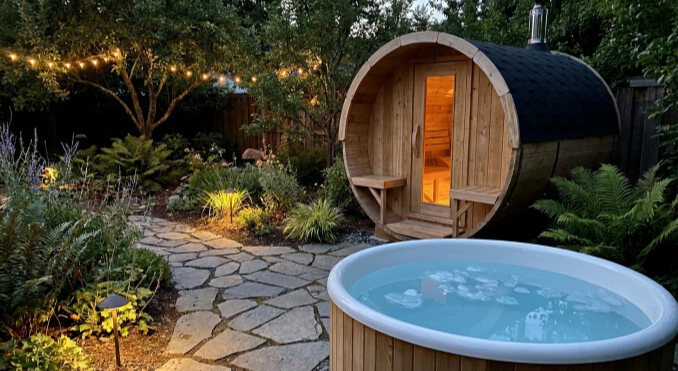

Traditional saunas heat the air to 170 to 195 degrees Fahrenheit using an electric or wood-fired heater, producing the intense, all-around heat associated with Finnish sauna culture. Infrared cabins run cooler, 120 to 150 degrees, and warm your body directly through infrared panels rather than heating the room around you. Neither one is universally “better.” The right pick depends on how much heat you can tolerate, how much power you have available, and whether you’re chasing the cardiovascular research specifically or just want a good sweat.
How Does Each Type of Sauna Actually Heat You?
A traditional sauna works the way a convection oven does. A heater, usually loaded with volcanic rocks, warms the air in an enclosed cabin, and that hot air in turn warms you. Splashing water on the rocks adds steam, which raises humidity and makes the heat feel more intense at a lower thermometer reading. This is the style behind most of the long-term Finnish cohort research on sauna bathing and cardiovascular health.
Infrared cabins skip heating the air almost entirely. Panels built into the walls emit infrared wavelengths that penetrate skin directly, so you feel warm even though the air around you might only read 130 degrees. People sometimes describe this as a gentler heat, which is accurate, though it also means infrared sessions typically run longer, 30 to 45 minutes versus 15 to 20 for traditional, to get a comparable sweat response.
Which One Heats Faster and Costs Less to Run?
Traditional electric heaters draw more power, often 6 to 9 kW for a home-sized unit, and need 15 to 30 minutes to bring a cabin up to temperature. Infrared units draw far less, typically 1.5 to 2 kW, and are ready in about 10 to 15 minutes since they’re not heating a large volume of air. On a home electricity bill, that gap adds up. An infrared session might cost 15 to 30 cents in electricity, while a traditional electric sauna can run 50 cents to over a dollar per hour-long session, depending on local utility rates and how well insulated the cabin is.
Installation cost differs too. A quality two-person infrared cabin typically lands between $2,500 and $4,500, and often plugs into an ordinary 120-volt outlet. Traditional cabins run from around $3,500 for a basic kit to well over $10,000 for a larger cedar build with a premium heater, and heaters above roughly 6 kW usually need a dedicated 240-volt circuit, which means an electrician’s visit if your garage or backyard doesn’t already have one.
Which Fits Your Space and Your Budget?
If you’re working with a small mudroom, a corner of a garage, or a tight backyard footprint, infrared cabins are generally more forgiving. Many two-person models fit in under 20 square feet and don’t need the ceiling clearance a traditional cabin with a freestanding heater does. Traditional builds want more room to breathe, both for the heater itself and for the bench layout that lets steam circulate properly. If you already have a shed, a finished basement corner, or an outdoor structure with power run to it, a traditional cabin becomes a realistic option. Shopping around a specialty retailer that carries both formats side by side, such as the SweatDecks catalog, makes the size and price comparison easier than bouncing between separate infrared-only and traditional-only sellers.
Which One Has Better Evidence Behind It?
This is where the two styles genuinely diverge. The Mayo Clinic Proceedings review of sauna bathing and cardiovascular outcomes, along with the broader body of research summarized in Evidence-Based Complementary and Alternative Medicine, is built almost entirely on traditional Finnish-style sauna use, typically at higher temperatures and shorter durations than infrared sessions. That doesn’t mean infrared does nothing. The physiological mechanism, elevated core temperature and heart rate, still applies. It means the specific studies people point to when they talk about sauna and heart health were mostly conducted in traditional cabins, so if replicating that exact research matters to you, traditional is the closer match. If your priority is comfort and a lower barrier to consistent use, infrared’s gentler heat may simply mean you actually use it more often, which counts for something on its own.
What About Maintenance and Everyday Use?
Traditional cabins need a bit more upkeep. Wet wood benches, splashed water, and steam mean you’re wiping down surfaces and airing the cabin out after most sessions, and the rocks in the heater eventually need replacing as they crack from repeated heating and cooling. Infrared cabins stay dry throughout a session, so cleanup is closer to wiping down a gym bench, and there’s no rock bed to maintain. Neither format is high maintenance in absolute terms, but if you’re the kind of household where a chore that takes an extra five minutes each time eventually gets skipped, infrared’s lower upkeep is worth factoring in.
Noise and ambiance differ too. A traditional heater ticks and hisses as water hits the rocks, which a lot of people associate with the ritual of the experience. Infrared panels run silently, which some find more relaxing for reading or just sitting quietly, and others find a little sterile compared to the sensory feedback of steam. It’s a small thing, but it’s one of the reasons people who’ve tried both formats often have a strong preference that has nothing to do with temperature or cost.
So Which Should You Choose?
Pick traditional if you want higher heat, shorter sessions, the steam option, and you have the electrical capacity and space for it. Pick infrared if you’re short on power, space, or heat tolerance, and you’d rather sit for 30 to 40 minutes at a gentler temperature than 15 minutes at a punishing one. Neither choice is wrong. The people who stick with a home sauna long term are usually the ones who picked the format that fits their actual house and actual tolerance, not the one that sounded more serious in a product description.
Frequently Asked Questions
Is infrared or traditional sauna better for beginners?
Infrared tends to be easier because cabin temperatures run 120 to 150 degrees instead of 170 to 195, so the heat feels less intense while you’re building tolerance.
Which uses less electricity, infrared or traditional sauna?
Infrared cabins generally cost 15 to 30 cents per session in electricity, compared to 50 cents to over a dollar for a traditional electric heater, since infrared doesn’t heat the full volume of air in the cabin.
Do traditional saunas need special venting or wiring?
Most home electric heaters over 6 kW need a dedicated 240-volt circuit, and indoor installations need a heat-rated vent. Infrared units typically run on a standard 120-volt outlet.
Can you get the same health benefits from infrared as traditional sauna?
Most published cardiovascular research is built on traditional Finnish-style sauna use, not infrared. Infrared still raises core temperature and heart rate, but it hasn’t been studied nearly as extensively.
References
- “Cardiovascular and Other Health Benefits of Sauna Bathing: A Review of the Evidence.” Mayo Clinic Proceedings, 2018. https://pubmed.ncbi.nlm.nih.gov/30077204/
- “Clinical Effects of Regular Dry Sauna Bathing: A Systematic Review.” Evidence-Based Complementary and Alternative Medicine, 2018. https://pubmed.ncbi.nlm.nih.gov/29849692/
- “Effects of heat and cold on health, with special reference to Finnish sauna bathing.” American Journal of Physiology, 2018. https://pubmed.ncbi.nlm.nih.gov/29351426/